Head to Head : Vert

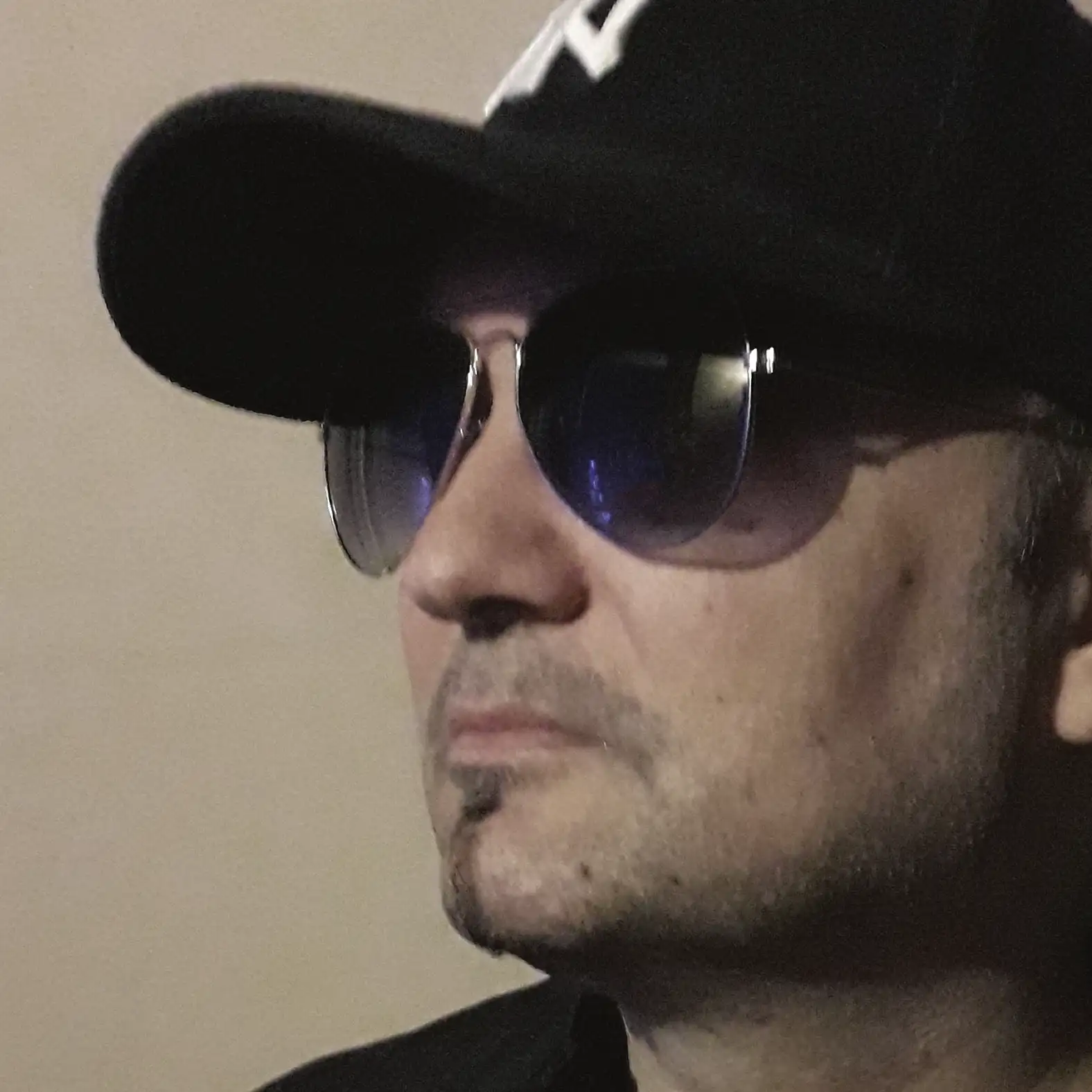
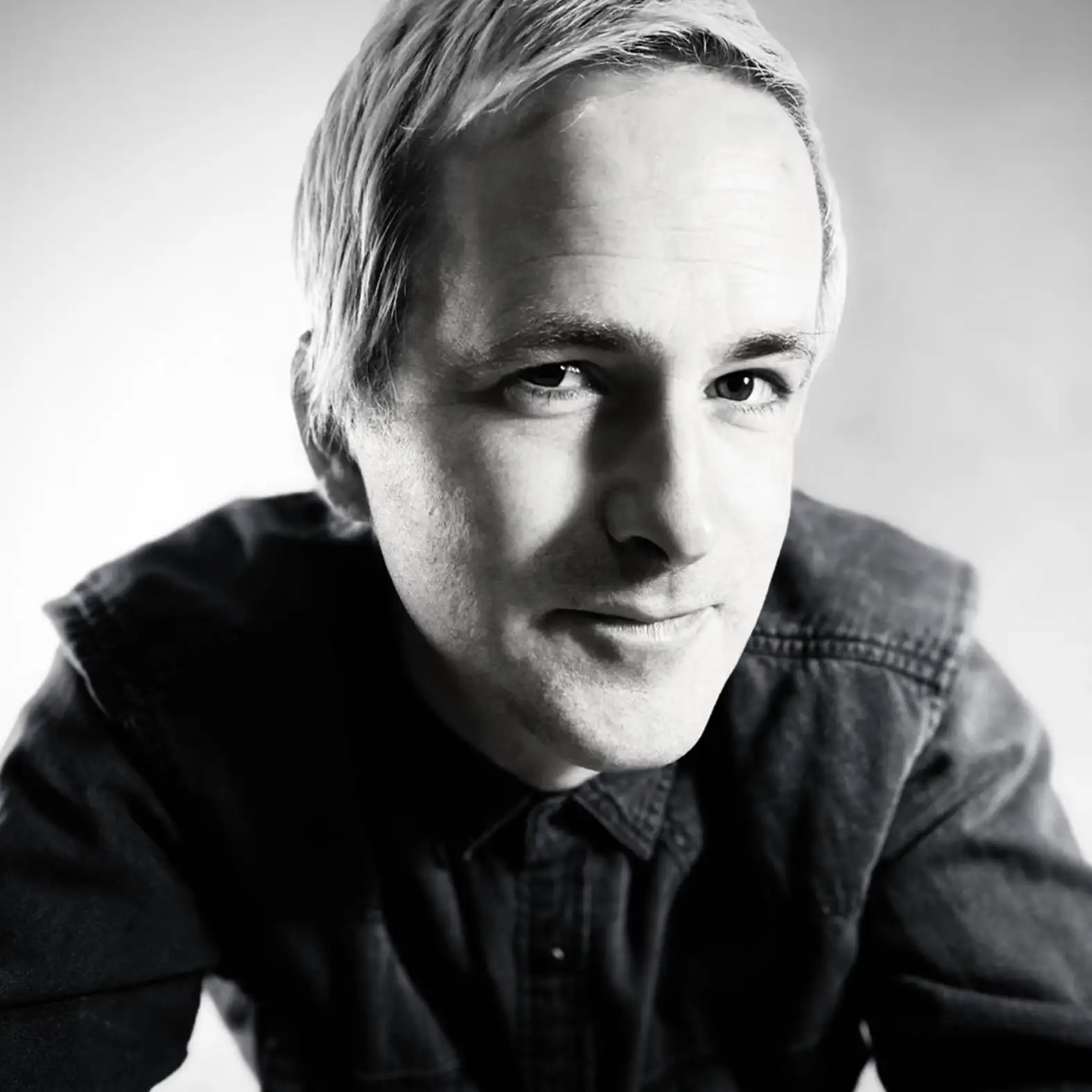
Having just returned from a world tour with Sonig label mates Mouse on Mars, and enjoying critical acclaim for his latest album "nine types of ambiguity",UK recording artist Adam Butler, aka Vert took a moment out of his busy schedule to fill us in on the process behind creating his diversified sonic portraits.

AAS - How was the tour ? What were the best shows for you ?

Vert - Fantastic (except for the bits that weren't). I've never done a tour that big before, so it was a very new experience.


I think that touring really is a unique thing to do, very paradoxical in a lot of ways: like it's obviously pretty exciting, because you're constantly going to new cities, but at the same time you're doing the same thing day after day so there's a mundane routine to it as well.

I really enjoyed playing with Mouse on Mars, and I think - without wanting to sound arrogant - that the combination worked pretty well. They're very 'rock n roll' when they play live, and that contrasts well with this 'pale, bald guy' (as one review described me!) with his laptop and keyboard.

Japan was fairly incredible - literally - both in terms of the place, and in terms of the reaction to the music. I've never come across such attentive audiences before: whenever I reached a quiet bit in one of my tracks, I'd realize that there was no-one talking, it was completely silent! In fact, at one gig Microstoria played after me, I had a met an English guy and was chatting to him, and someone came up and asked us to shut up!

Germany was good in different ways, some of the shows were great, especially Bochum (which is near Cologne) and Berlin. Munich, on the other hand was less good: my laptop managed to dislodge a screw into the cooling fan and melt the motherboard and processor. I managed to salvage the hard drive, but the rest of it was a write-off.

And America was, er, big. Some of the shows there were great as well: New York, San Francisco (predictably, I guess).

What kind of rig were you using live this time ?

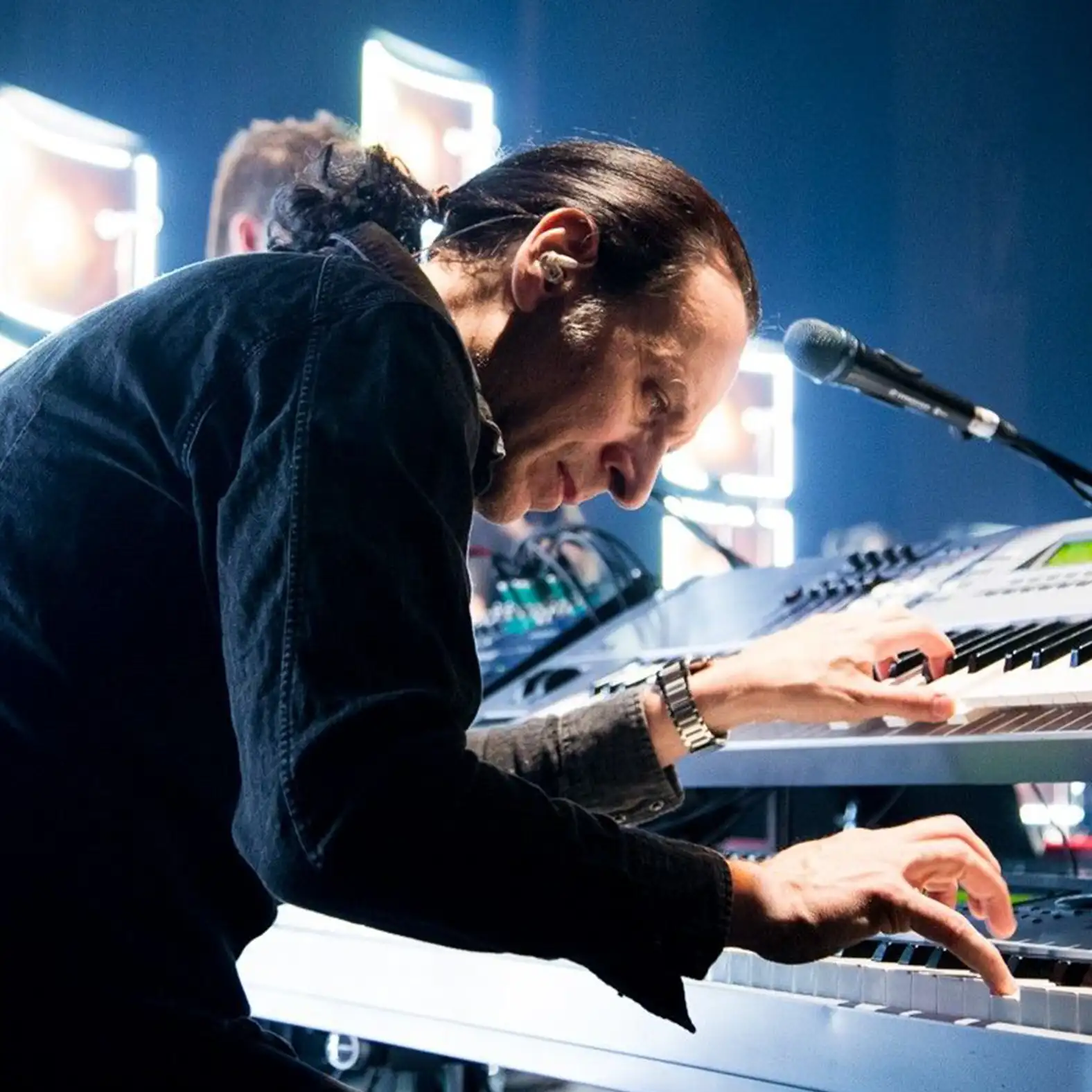
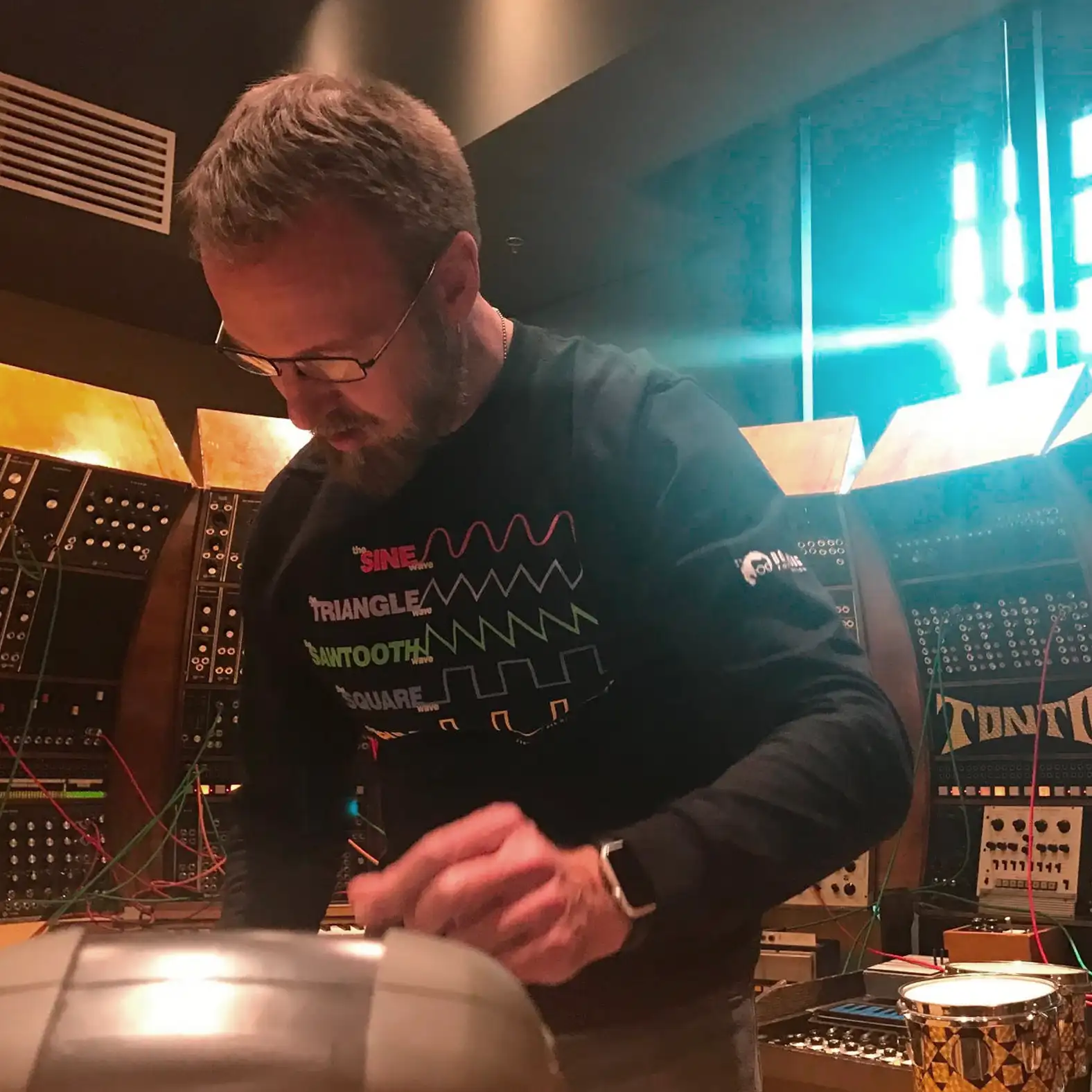
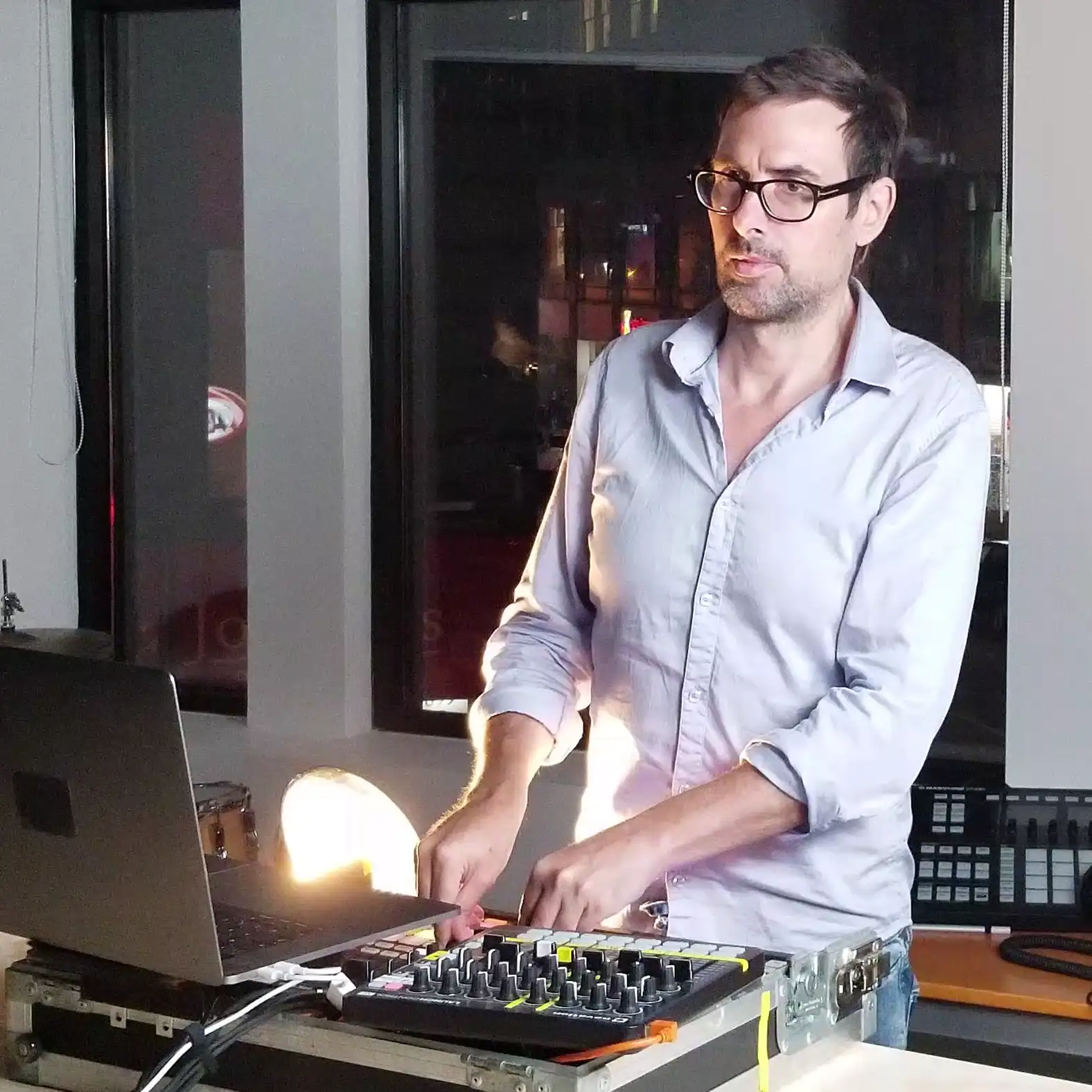
Almost everything is running on a PC laptop (originally a 433MHz, but when that died I got a 1GHz) using Cakewalk, Sound Forge, Audiomulch, Reaktor and XGEdit (not Tassman!- sorry! But then for me it's more of a studio thing). I use an Egosys Wami Box as an audio interface,- which is not great but does work, once you've figured out its idiosyncrasies - a Yamaha MU10 tone generator, a midi keyboard, and a mixing desk. Oh, and a Boss Super Overdrive.

Alot of your previous work explores works, or themes there in, of >other, often very influential, artists. What sort of things motivate you to this type of project ? Is the creative process different for you then when you're building something from scratch ?

I guess you're talking about 'The Köln Konzert' and 'Tense and Leaning', which I mention on the website. It seems pretty natural to use other artists' work as a springboard, although in these two cases the motivation was very different. It's funny that in electronic music, there is still this very romantic notion of the artist working alone, in isolation from the rest of the world and all other music. Maybe this is something to do with the whole anonymous computer aesthetic. But in all other artforms - and most other forms of music - context is recognized as being almost inescapable. Henry Miller talks about Dostoyevsky, Francis Bacon copies Velazquez, Sun Ra covers Duke Ellington. And this makes their work richer.

But 'The Köln Konzert' had a very particular - and simple - motivation: I wanted to write a brand new piece of music for the first show I ever played in Cologne. I spent a long time thinking about what that piece of music would be, and then the whole Keith Jarrett thing just made me laugh. I don't think that it needed a different creative process, although I guess it sped things up a bit, as I already had certain things decided for me - the almost omnipresent piano, the melodies that I was going to use, etc. Most importantly, this meant that the whole process was a lot faster, and I think you can really hear that in the album - the music was made very quickly (by my standards, at least), so it sounds quite spontaneous and homogenized.

What was the crowd reaction when you performed the Köln concert there ? Have you explored this sort of 'direct reference' with performances in other places ?

Actually, when I played 'The Köln Konzert', I thought it was terrible. As I was playing it - the first time I'd played it all in one go, I'd still been finishing it the night before - it sounded pathetic and ill-conceived, and I was very aware of the absurdity of using Keith Jarrett. Especially - and I hadn't realized this - as 1999 was actually the 25th anniversary of the original concert! But the crowd reaction was very good, especially considering that probably only about 10 people there had ever heard any of my music before. I haven't done anything like it since then, but I would like to, I think. If the right situation comes up. It makes a change from the whole track-based approach to music, and it's fun to do. And apparently 'The Köln Konzert' was named as the best record of last year in some Japanese jazz magazine, so I guess I'd better do another one quick!

When I asked a few random people to describe your music to me, the word jazz came up somewhere in every description. Do more traditional musical composition techniques play a signifigant part in the process for you ?

Yes, absolutely. I've been trying to teach myself about composition for the last few years. In the simplest sense, this means working with different scales and modes - just by using a specific range of notes, you can easily create a particular effect. Want something spooky?- Use a whole tone scale! Actually the challenge is to make something that doesn't just sound spooky or self-consciously "experimental", but it's great when you realize that you can really groove in an unusual mode.

Lately, I've been starting to use simple serial techniques as well, which means taking a load of notes and transforming them in various ways (transposing, inverting) - it just allows you to work with more interesting harmonies and cadences. On the other hand, I can't resist a cheesy melody! None of this has much to do with jazz, but that input is much more instinctive. It's pretty hard to deconstruct basic things like 'groove', 'funk' and 'swing' (although I read a great article recently that pulled apart 'I Feel Good' to analyze why it was so funky - it had graphs and everything!)

From a technical perspective, what kind of tools are most exciting for you these days ? Are there things you'd like to see developed that aren't available ?

The most immediately exciting technology is, of course, synths such as Tassman, Reaktor, etc. We now have access to a range of sounds that have never existed before and - maybe more importantly - interfaces that allow us to create and manipulate these sounds without needing a PhD and several oscilloscopes. It's very rare that I use the same sound in more than one track (except for real instruments and birdsong), so I have a constant thirst for sonic novelty.

In terms of new development... I'd like more things with 'random' buttons on them! I love probabilistic approaches to both sound design and composition, so I always get very excited when I find randomization functions that can be controlled to some extent. Also, I have a very specific desire for more control over quantising within sequencers. I spend hours quantising things - often in probabilistic ways - to try and create the right balance of natural and artificial, and I'd love it if someone created more intelligent functionality. Finally, and most importantly, I'd love it if people took time out from bloating their spec sheets to try and produce software that is bug-free. This is something that I'm very happy about in version 2 of Tassman - it seems pretty damn stable to me.

How has your experience been using Tassman ? What kind of things have you been getting out of it ?

As you can judge from the previous comment, my experience has been very good. I have a few niggles about the interface, but then there's no such thing as a perfect interface. What I really love about it is the complexity of the sound: when you repeatedly play one particular sound, there are minute variations, just as when you repeatedly play one key on a piano. So it is immediately in a different realm to most other synths, real or virtual. And I love imagining a physical object and then attempting to re-create it. I recently did a gig in Brussels with an artist called Robert Rutman, who makes sculptures out of metal and then plays them with bows. I've always been a big fan of the sound of bowed metal, so I built some Tassman instruments that were based on that, and we played together, blurring the border between real and virtual. A real step forward for me is that I can now use Tassman in Logic. It's so great to be able to build an instrument and use it immediately as a VSTi. As you can probably tell, I don't use the presets very often, I'm much happier creating my own sounds, often based on bowed metal, or mallets controlled by LFOs. Textural stuff, I guess.

Many people have commented that the electronic music market is nearing a point of saturation right now. How do you feel about that, and where do you think things need to go at this point ?

It's true. There's been a lot of work done in creating new languages, new modes of expression - new syntaxes. The problem is that as soon as you have a codified syntax, people come along and start using it, but forget about the really important bit: ie. the semantics. Once a particular approach gets assimilated, lots of people come along and take the same approach, without wondering why, or how, that approach came about in the first place. And it's very easy to make electronic music these days, because we have so many great tools. For me, it's the 'music' - rather than the 'electronic' - that's important. I don't have a big history of being an electronic music fan, and I don't listen to that much of it. I guess that we'll see an evolutionary process - survival of the fittest - which is what always happens in the long run. Eventually, people will get bored of these new syntaxes, so that music which uses them without having any substance will lose it's sheen of 'hipness', and just appear empty and dull.

Who would you say are the most exciting artists out there for you right now ?

Even after hearing them every night for two months, I would have to say Mouse on Mars. I think Idiology is one of their best albums yet. And Scratch Pet Land too, who are also on Sonig. I've just been listening to some of Fennesz's new album, Endless Summer, which made me quite excited (although that might just have been the coffee). Lately I've been mainly listening to Luc Ferrari and the Flaming Lips, and I'm *very* excited at the prospect of a new Mercury Rev album. Oh, and Hebert's latest album is very good, especially the second track, which makes me go all gooey every time I hear it.

Finally, what's on the agenda for the next while ?

Lots more music! After the tour, I really feel like I want to hunker down and work on a lot of new material. Primarily a new album for Sonig, but hopefully other projects too. I just did a solo piano piece for a 7" label from Berlin, Emphase, which was challenging, and I'd like to explore the piano more and more. I also harbour fantasies about doing some group improv stuff, but it's incredibly hard to think of software-based approaches. You really need to have total control over your tools to make that work. Overall, I feel like I'm still learning, and I still have a *lot* to learn. So that's my agenda, both short- and long-term: keep learning, keep improving.

Thanks alot Adam, and good luck.

DISCOGRAPHY:

"broken breakbeat bebop" 12" bovinyl 1996
"mewantemooseic" 12" sonig may 1999
"the koln konzert" CD/LP sonig may 2000
"moremooseicforme" 12" sonig feb 2001
"nine types of ambiguity" CD/LP sonig may 2001

LINKS:

www.isness.org/vert
www.sonig.com