Head to Head : I8U

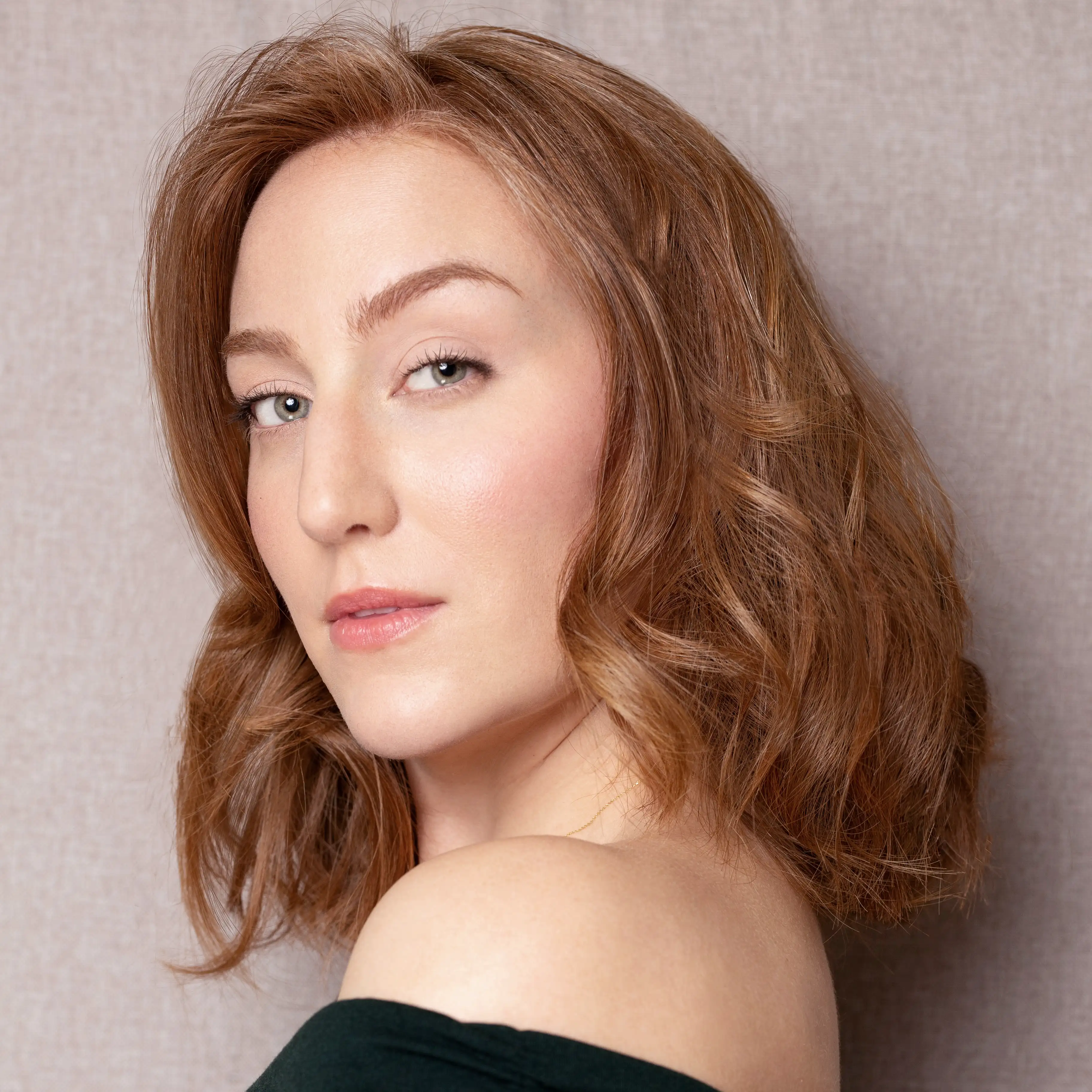
All who have had the pleasure of taking in a performance by Montreal sound artist I8U will undoubtedly describe it with a single word;

Intense.

Snippets of almost recognizable found sounds twist and morph into an endless sea of reverberated digital artifacts and sub-bass drones, stirring up emotions from across the entire spectrum.

Having just released a second CD, appropriately titled "I8U b" , we sat down to discuss the methods and motivations behind her lush, organic soundscapes.


1) How did you get started making music ?

At a young and tender age, my parents would have me sit between 2 speakers while they played various albums, I was so mesmerized by the sound that I would just stay there and ask for more. That interest never left me so I was enrolled in classical piano classes. While studying, I composed my own music as well. I became interested in other styles of music and that led me to meet blues musicians , so I ended up playing blues in various festivals and the Montreal International Jazz Festival. And then I met David Kristian. That encounter proved to be very important because once I was exposed to experimental sound, it changed my whole way of thinking about music and I felt at the time that I had found what I had been looking for in terms expression. I decided to fulfill my professional engagements and then, left the "world of traditional music".

2) Who or what would you consider your greatest external influences?

As for who, I would have to say, Debussy, Penderecki, John Coltrane, Aube, Thomas Koner, Vladislav Delay and lately, I'm particularly fond of a release by John Hudak and Jason Lescallet on Intransitive Recordings, and of course David Kristian. As for what, I'll say any sound that we don't hear and by that I mean, sounds that have become such an intricate part of our daily lives that they have become too familiar for us to pay any attention to.

3) How, if at all, does your previous formal musical training and experience influence the more experimental work you do now ?

I first spent a lot of time unlearning all the structures, melodies, chords and rhythms that shaped the way I heard and played music, then, I spent a lot of time learning to program sounds and to listen. I eventually realized that I could apply elements of classical music in what I was producing such as dynamics for instance. Same thing for blues, there is a wonderful sense of timing in blues as well as the way you can pull an audience in with you, those are all elements that I incorporated along the way, somewhere.

4) How would you describe your music to someone who had never heard it before?

I have had to do this a few times and it varies depending on who I'm speaking with because of their frame of reference . Generally, I tend to describe it as electronic experimental, then I get a "what's that?" I usually respond with "the kind of music you would hear in a film or soundscape." And from there, I try and find a movie that they know that would help them understand. I realize it's not an accurate description, but it's as close as I can come up with.

5) You've been involved in various 'net-jams' over the past couple of years, how does that format influence your performances in comparison to more traditional presentations?

Net jams are a great format because, first of all, you're playing with people you've never met before, there is a great fascination for me in knowing that I will communicate with these artists musically and that I might not talk to them or interact ever again. Being that it is via Internet also is amazing since days prior to this technology, communication on this level with these artists would not have been possible without traveling. In essence, the Internet breaks down barriers between artists. I also enjoy the problems such an event brings because it adds a great deal of suspense to the performance. For instance, the latency factor, if we will have delay, how long will it be, how do we use it to our advantage, not knowing what the other people will send as sounds and having to respond with something that will compliment what they are sending, the compression factor and more..

6) I'd like to take a moment here to mention that the performance you did with Martin Tétreault this past year for Mutek was truly riveting ! Martin is definitely best known for his manipulations of low-fi equipment, how was it working with the technological contrasts of your respective styles ?

Thank you. Martin and I first met last October while performing solo as part of the silophone project along with Francisco Lopez. This meeting resulted in 2 workshops that were held in December and January . We found that the technological contrasts complimented each other and it was a natural exchange, it requires us to listen intently to each other since all we do is improvised and experimentation, we always seem to find frequencies that will inspire a response and trigger another intention. The key for us I think is to listen to the intention that is being put forth by each other and have a profound understanding of that process. It's very hands on and intuitive

7) What gear do you use in the studio and in performance situations ?

My studio these days consists of a Electribe ES-1 Korg sampler, E-mu Morpheus, Doepfer MS404, Sony MD, a couple of effect units, Soundforge, Cubase VST and Tassman. In performance situations, it varies according to the event's particular needs. Overall, I like to travel light, so, usually, I take the sampler and MD with an effect, and my longtime companion the Emu morpheus.

8) What sort of work do you do with Tassman ?

Basically, I don't use presets, so with Tassman, I have been creating my own synths based on elements that I like, I build and build until I'm satisfied with what I hear. My next step is usually to improvise with it while recording that process, I like to know if I can take it where I want to go and I also like to find out what else I can do that I would not normally do. If I'm happy with the discoveries, I keep it. At this stage, the tracks that I like are added to my library of sounds/recordings which will be used in a variety of ways. The other step for me, is then to listen for moments that I can sample, to be processed and used as "clicks and cuts" or for drone material. The great advantage of working with Tassman is basically that I can reproduce whatever I can come up with in my head, that's an incredible freedom to have.

9) Your music has received very diversified descriptions in review, some calling it warm and organic, others describe it as dark machinism ? Which end of that spectrum do you feel closer to ?

I have a funny relationship in regards to my music. I am very connected to it while producing it, but once it leaves me, I feel I have done what I had to do and it is left to the audience to interpret it according to how they feel. So I think that while creating and being involved in the process, I probably feel one end of the spectrum to the other!

10) How has your creative process changed on your latest CD since the last one ?

Well, I look at every cd as the result of an exercise, an exploration of an area I haven't ventured into yet, the last one was very "drones", low frequency based. With this new CD I went towards beats a bit more, not as in 4/4 but as in beats within the sounds themselves, generated by elements in sounds, I also approached different frequencies, I felt this was an area that demanded my attention. I think it's all about where one individual is at in terms of creative process. As for myself, one thing I fear most for instance is stagnation, therefore I am most comfortable in unfamiliar territory, that grey area where you wonder if you'll make it, there is usually a fear element mixed in, that's where I am happiest, because I know that I'll walk away from that situation having learned something new about sound.

11) What things do you have coming up ?

I have a new release in the Netherlands on Bake Records, available through Staalplaat ,on which you can find examples of the work I referred to with Tassman, specifically on tracks 3 and 7. I have been invited to participate in a web art project which will involve my visuals and sounds, it will be launched in December 2001 and more live performances with Martin Tétreault and other projects that are simmering at different degrees at the moment and have not yet reached a boiling point.

http://www.create-transmit.com/intransitive/
http://www.davidkristain.com
http://www.staalplaat.com mailorder@staalplaat.com
http://www.i8u.com