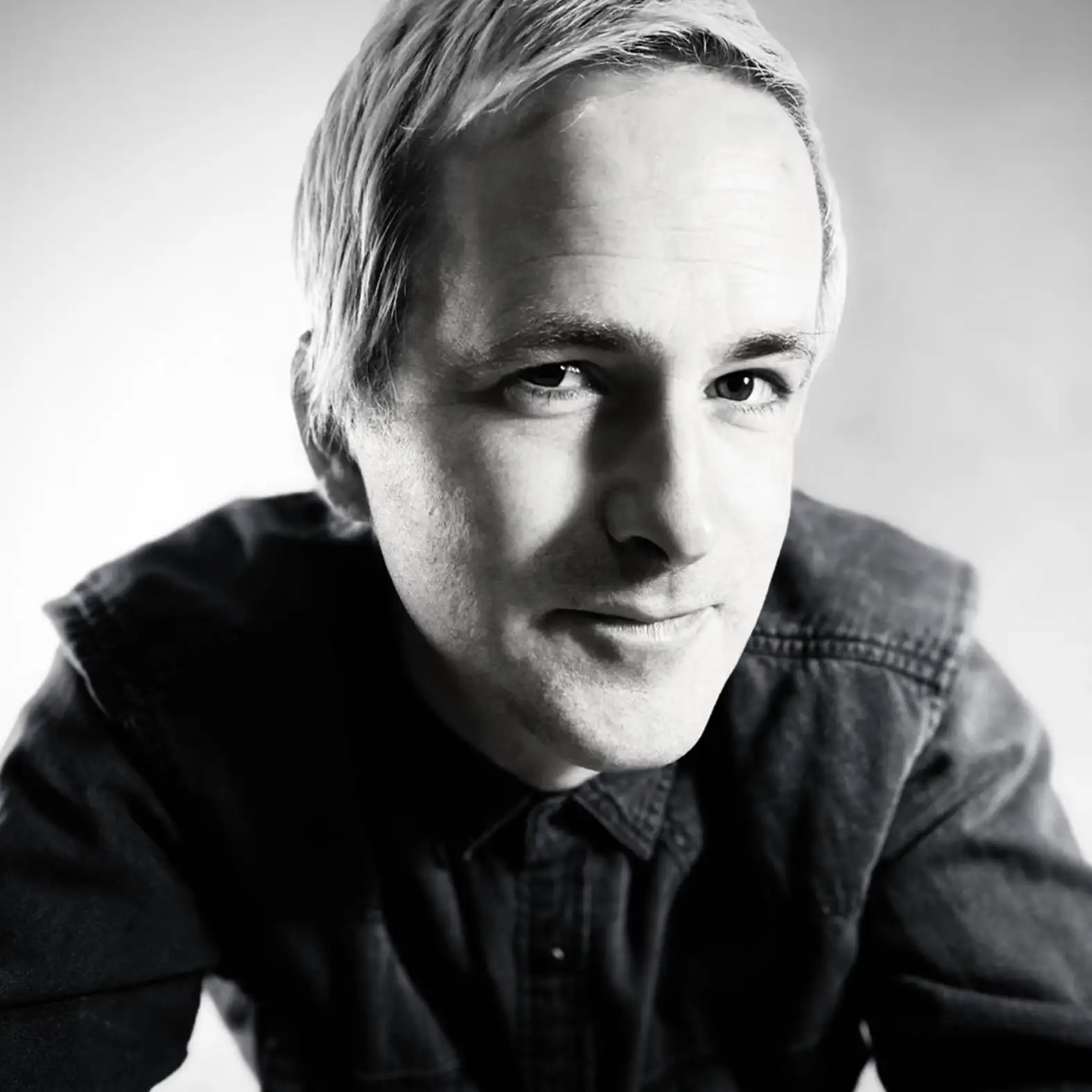
Harm Visser
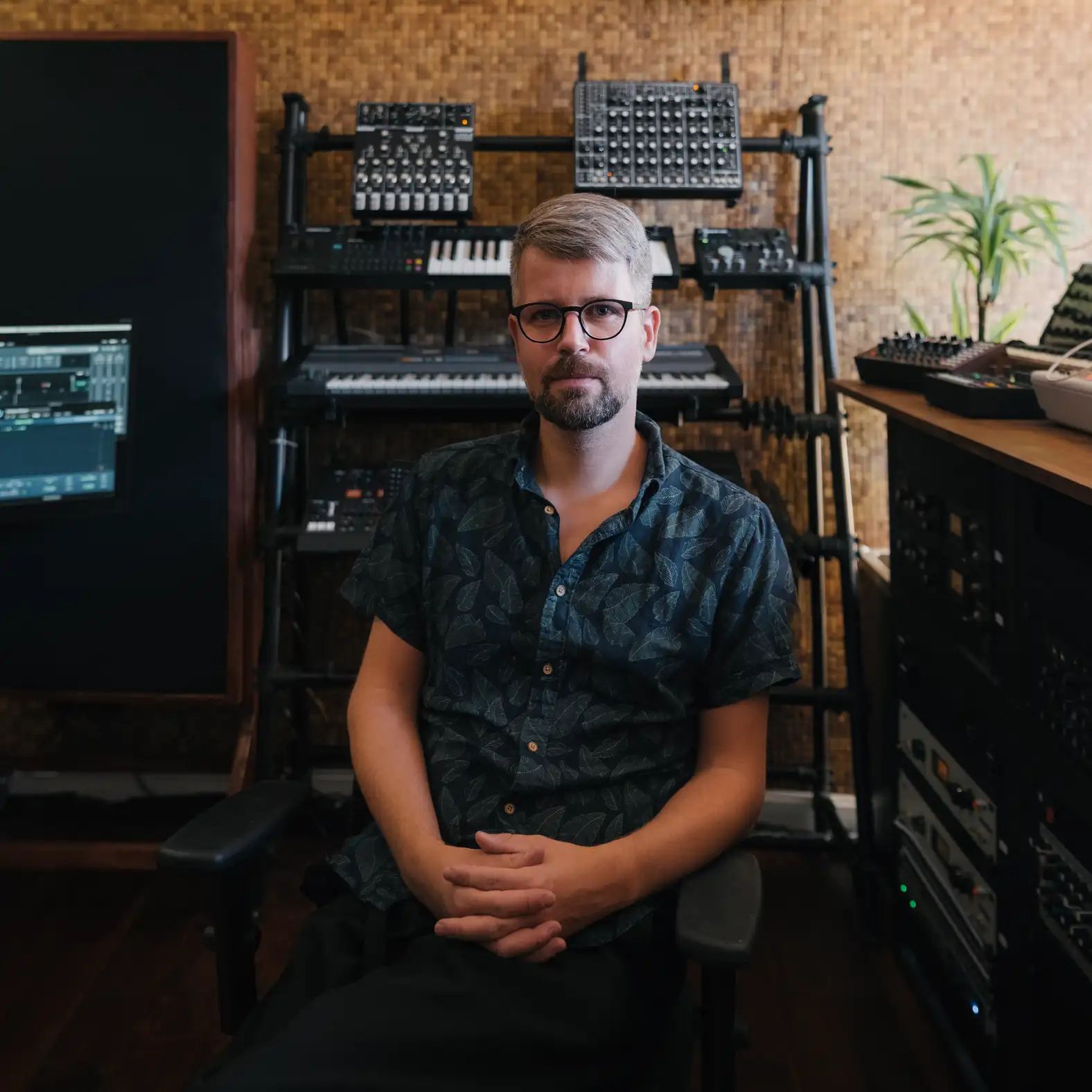
Harm Visser studied music theory and composition at the Utrecht Conservatory. Harm composes music for documentaries, he also worked with Dutch graphic designer Jaap Drupsteen and the Dutch painter/performer artist Moniek Toebosch. For the last four years Harm's compositions have been focused around the use of physical modeling brilliantly taking advantage of the tremendous freedom in performance technique that this synthesis method provides. Today he lives and works in Amsterdam.
A Few Words with Harm Visser
Maybe you could start by telling us a bit about your background, how did you get into making music, and more specifically, sound design?
When I was eight or nine, I got a guitar on my birthday. From that moment on I did nothing else than play rock. But also I was (and still am) a J.S. Bach lover. So I also learned to play classical guitar. When I was about fifteen I could play a 4 voice Bach fugue. Finally I went to the conservatory to study musical theory and composition. Then, in 1986, I got my first Macintosh computer and this was about the beginning of my fascination for sound as such, and it has never stopped.
What projects have you been working on recently?
I have done some composition work for Moniek Toebosch, a Dutch painter and performance artist. Besides this I have worked for four years on my Korg SynthKit/OASYS PCI project; I have created a lot of physical models for this system. It was a very interesting period, because you have to read a lot about the physics of sound production by real world instruments and, of course you have to listen to, how they sound, and what causes that particular sound. The drawback is that when I listen to pieces played by solo instruments, I often can't listen spontaneously without thinking: Is it possible to recreate this sound on a computer?
What is the process of getting a particular instrument sound?
As I said, it starts with listening and reading about that particular instrument. After that, it's a combination of knowledge and trial & error - comparing the created sound with samples of the real one. It's a process that consumes a lot of time.
How does Tassman integrates with your sound design work flow?
Perfectly, because you can do physical modeling with it! As an example, listen to my Violin/Cello patch. You can play it very romantic, or very soft and slow, hearing the bow/string friction noise, all in one gesture! This is impossible with sampled instruments, or you have to 'calculate' different layers for different playing styles. However, When using physical modeling, you can make your gestures much more spontaneous. I also want to say that AAS has done a great job to make modal synthesis workable, because this synthesis method is very difficult to manage in programs like Modalys (developed by IRCAM). It's a pity that Tassman has no parameters in the resonators to handle pluck or strike point positions in real time. That should be possible, I think. But who knows in Tassman 5...
You seem to be more fascinated by 'real world' acoustical sounds then by sounds that only computers are able to generate.
When we speak about real world acoustical sound it is not that I only love instrument sounds, it also may sound as if it can exist in the real word, like all kinds of scraping and friction sounds, which by the way are rather difficult to recreate. I also like additive synthesis. In the past I have worked a lot with programs like Softsynth and Turbosynth from Digidesign. Granular synthesis is great too. Curtis Roads has written a beautiful book about this subject, called 'Microsound'.
What do you consider to be the most challenging aspect of sound design?
Maybe this sounds a bit strange, but I never try to make a unique sound. In my opinion they don't exist. Your brain is always searching for a sound that it can recognize. Even when a sound seems to be unique, your brain says: it sounds like a kind of clarinet. So my challenge is to create sounds that fascinate us, even when it sounds dreadful.
Finally, what's coming up next for you?
I want to go on with developing sounds and making compositions. But I recently bought a Gibson 333, owning a Gibson was a boyhood dream of mine. So learning to play on this instrument is a future project too.