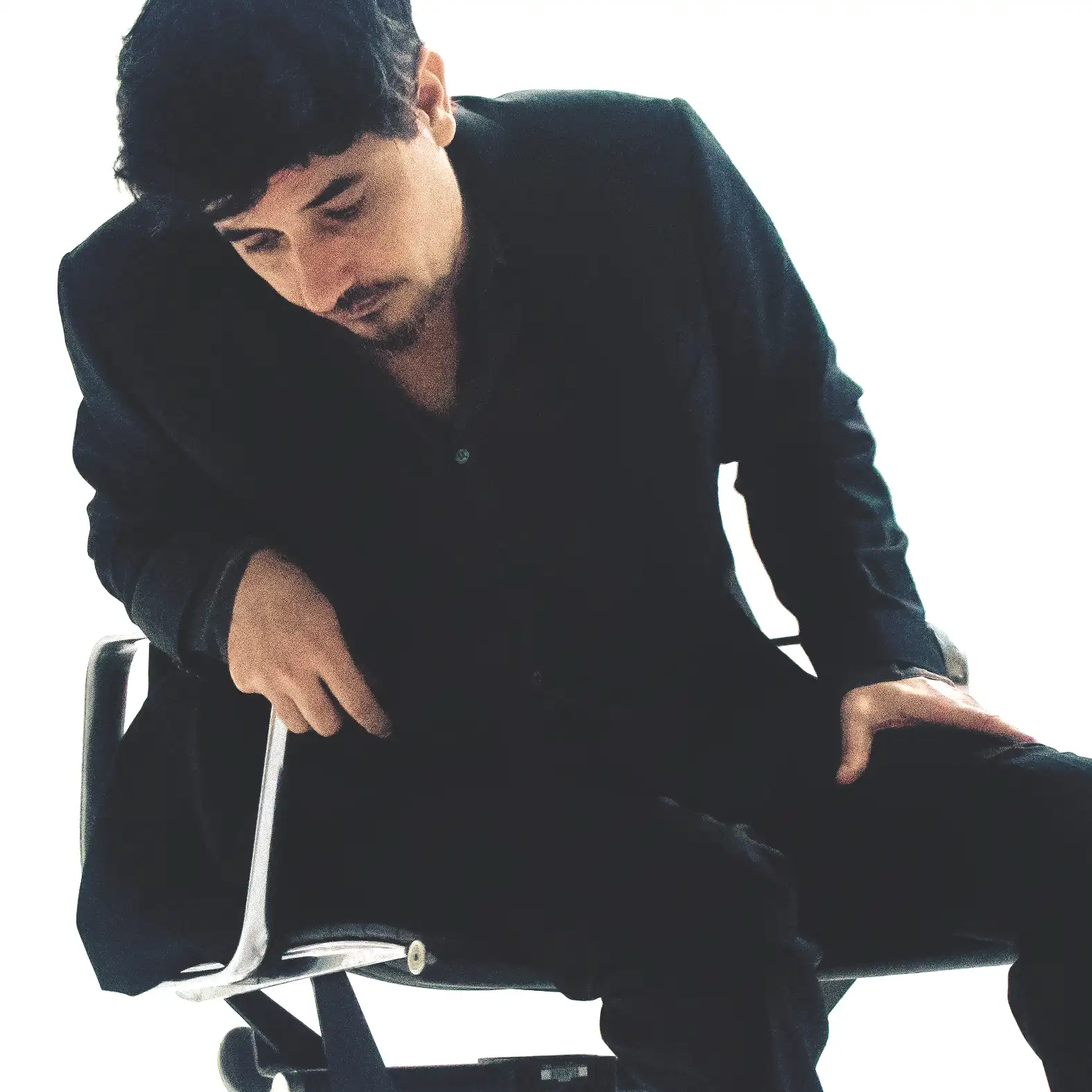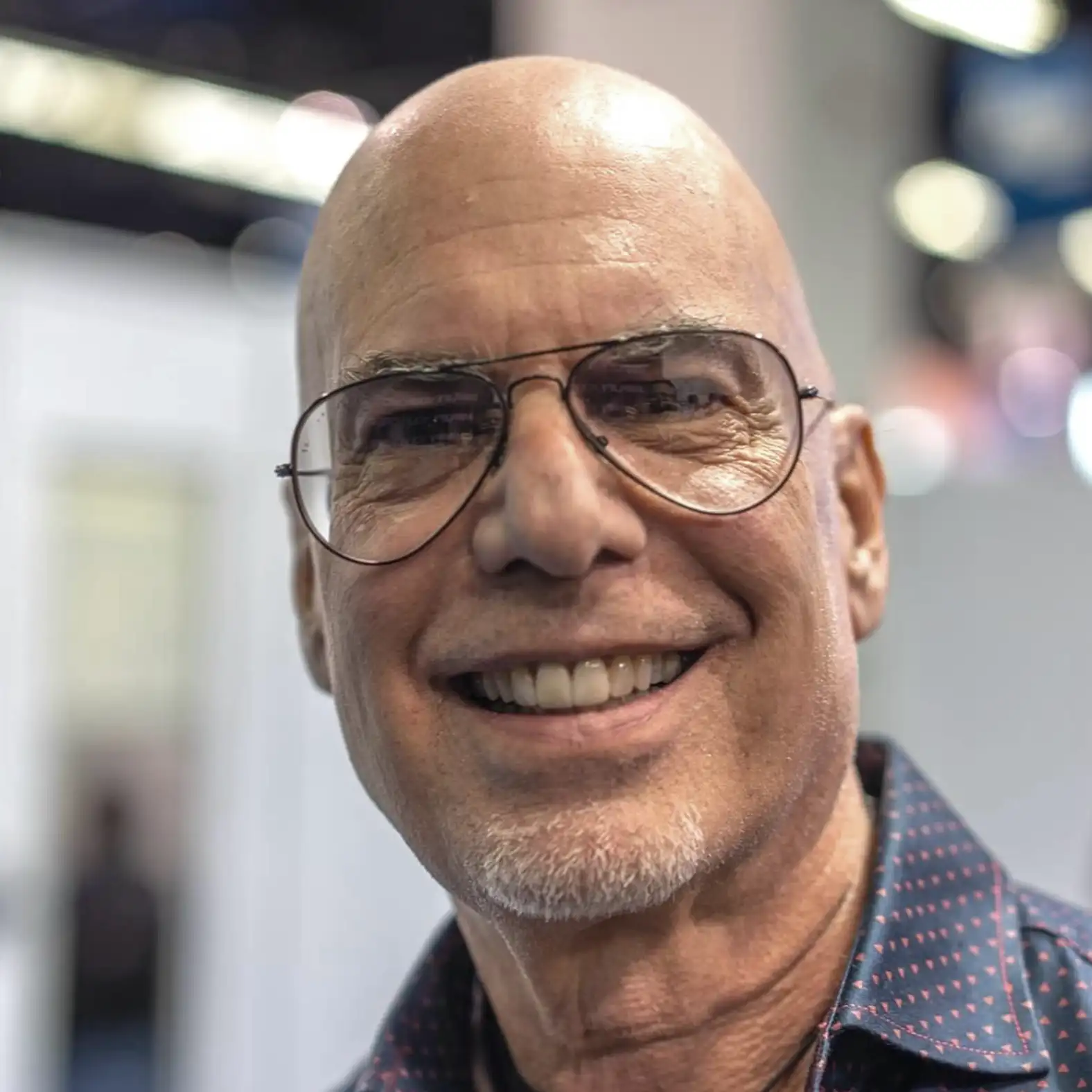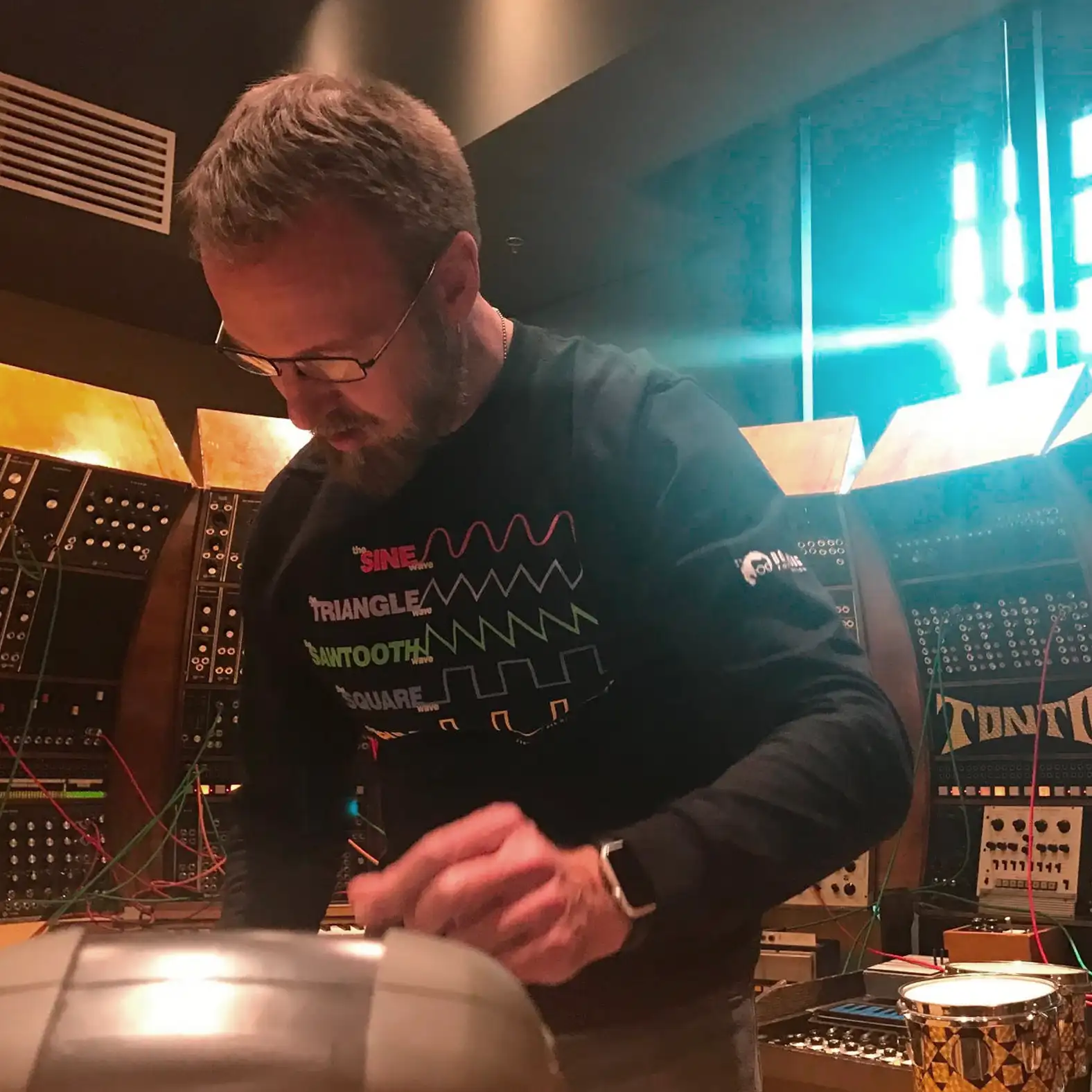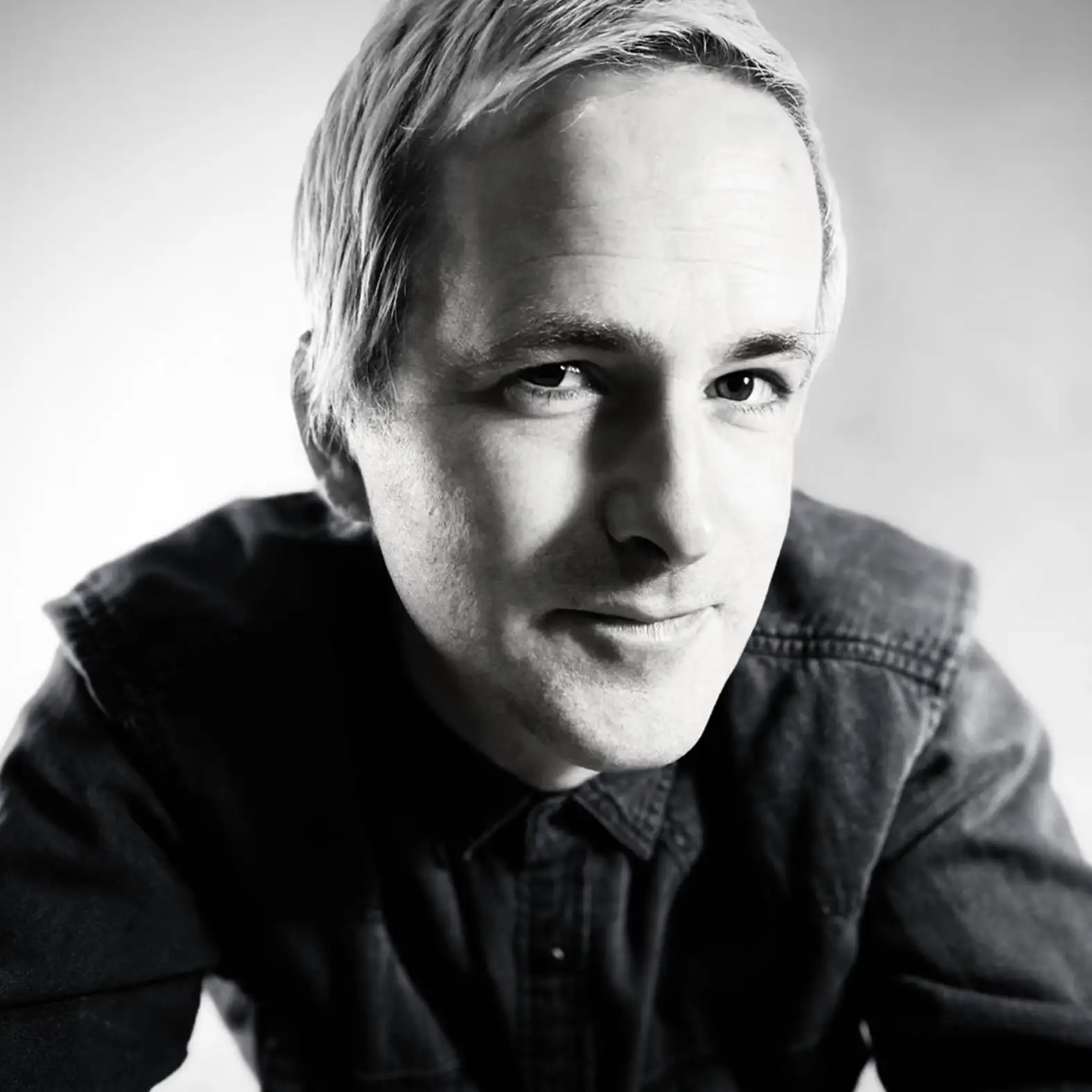
Guy Sigsworth
Guy Sigsworth began his career working with Seal on "Crazy". He's gone on to write and produce with Bomb The Bass, Bjork, Madonna, the Sugababes, Britney Spears and Bebel Gilberto. He's also one half of the band Frou Frou.
A Few Words with Guy Sigsworth
Guy, I know you're very interested in the artistic possibilities of physically modelled sounds...
I think it's one of the most fascinating concepts around. It's also very in tune with me and what I do. The thing is, I got a sampler long before I got a synthesizer. That's affected my approach to making music. I started off working with sounds that had some kind of prior acoustic existence. They'd all travelled through the air, down a microphone, sometimes via someone else's CD (*embarrassed blush*) before getting trapped in my sampler.
Sampling seems so familiar to us now, and maybe we've forgotten just how strange it is. As soon as you start moving samples up and down you're changing nature, changing the resonances, formants and acoustic ambiences of the natural world. Go up the keyboard one octave and you're taking your audience to a planet with a helium atmosphere; down one octave and it's a planet twice as large as earth, with twice the gravity.
Samples are ultimately just polaroids - they're still photographs of sounds. We get round that by having massive sample libraries, by treating the samples like the waveforms of a subtractive synthesizer, by selecting more and more varied and unlikely sound sources, and so on. But physical modelling gives us the chance to mess with acoustic properties at base level - and that's got to be exciting. All of those things we want to do but can't do with a sampler start to become possible.
And before you bought Tassman?
Most modelling products are cost-cutting reproductions of the already familiar - the 909 or 303 or whatever. I'm all for that - anything that lets the impoverished nonentity compete with the major-label glamour-puss is fine by me. But, let's face it, it's not the most exciting use of the technology. And most attempts to give us those extra possibilities have had fundamental design problems.
The Yamaha VL1 was very expensive, looked chintzy, and seemed designed to force you to make Kenny G -type elevator music. The Korg Wavedrum sounded fantastic, but was on the market for about two seconds before they withdrew it. In the world of software there's Modalys. I pay a subscription to IRCAM in order to use Modalys. In terms of the sounds in my head, yes, it can - in theory - do what I want it to. But it takes months of number crunching to get useable results out of it. It's terrible for anyone who has a girlfriend or boyfriend! Tassman, on the other hand, is brilliant. It's more flexible - and way cheaper - than a hardware modeller. But, unlike Modalys, it isn't so flexible you're forced to reinvent the wheel every time you boot up. The onboard library gives you a great "in". The learning curve isn't too steep.
Have you used Tassman on any of your recordings?
I just finished a song for the Shrek 2 soundtrack - a bizarre cover of "Holding Out For A Hero" no less, and it's got a couple of "featured" Tassman sounds. There's a fantastic musician called Stephan Micus, and he's made tunes by playing an ensemble of 20 different-sized plant pots. I set out to create a sound suggestive of that - ceramic, but somewhere between a gamelan and a tabla tarang. It was easy, and really fun, to do it with Tassman. The bass drum on that tune is also a Tassman creation. I love the sinewavey, speaker-destroying bassiness of electronic bass drums. But I also love the wide, airy sound of, say, an orchestral bass drum, when it's played not too loudly with a lambswool beater; or the very coloured resonances of a low djembe. I mixed up sounds from three different Tassman patches to get my "character" bass drum. Oh yes, the Britney song, "Everytime", that's also got some Tassman noises in it, sort of music-box-meets-harp.
Are you interested in the analog synth models in Tassman?
It's good they're there. I may use them at some point. But it's more the virtual acoustic side of the program that I'm spending time with. I like this new "Folktronica" scene, associated with Four Tet and others. If it was just DJs sampling Incredible String Band CDs I'd wouldn't care for it. Anyway, I think Tassman is the perfect program for that idea of music, because it's so easy to create folk-like sounds that suggest something between an acoustic guitar, a harp, and a dulcimer, without quite being any of them. Plus, these patches just react under the fingers in a wonderful way, quite different from layered samples.
I'm on a mission to create a modelled clavichord. Clavichord is the only acoustic keyboard instrument with natural vibrato - "bebung" they call it, I think. Not that there's much call for it in the pop charts right now. I'll let you know how I get on...
Anything more you want to see from the Tassman developers?
Yes, lots. I think the program is still at the start of its evolution.
In the recording studio I've sometimes used the resonance of one instrument to colour the sound of another. For instance I've put a loudspeaker under a piano, playing back a drum loop. I've then put my foot on the sustain pedal, and miked up the resulting piano resonance. I've also tuned an acoustic guitar to an interesting chord, placed it upside down on a keyboard stand, then drummed on the back body of the instrument to create interesting percussive resonances. How could this kind of approach - sort of "cross-resonating" one instrument with another - be applied to physically modelled sound?
A lot will depend on what kind of interfaces people use with their laptops, and if they become flexible enough. I'll give you an example. There's this percussionist called Glen Velez, and he just plays frame drums. But sometimes he doesn't just strike the drum. He rubs the side of the drum as if he were polishing it. Or listen to a great tabla player like Zakir Hussain. Even though he's just playing two drums, with two fundamental resonances, the range of sounds he can get is enormous. I'd ultimately like to see physical models that can react to the performer/programmer like that.