Head to Head with David Kristian

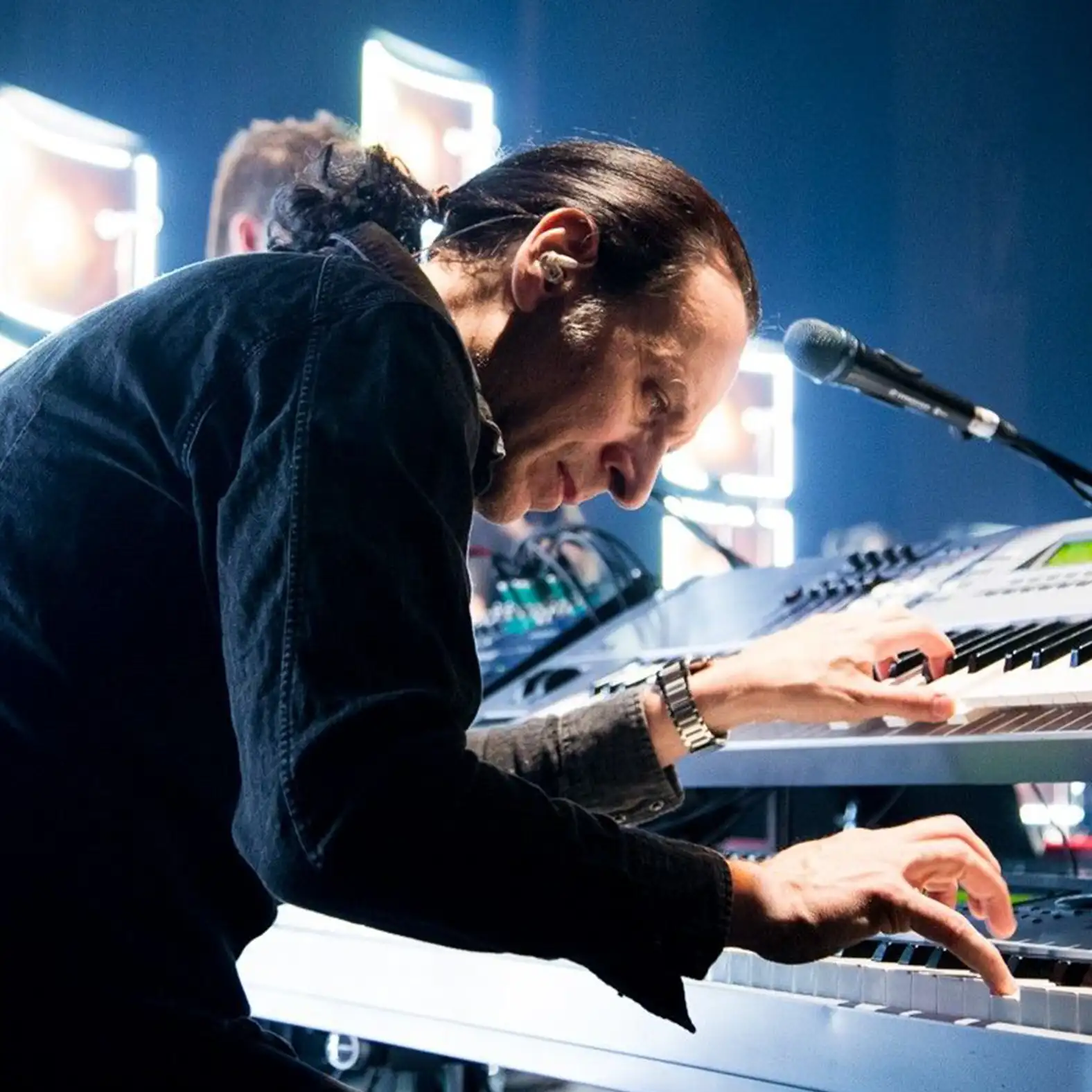
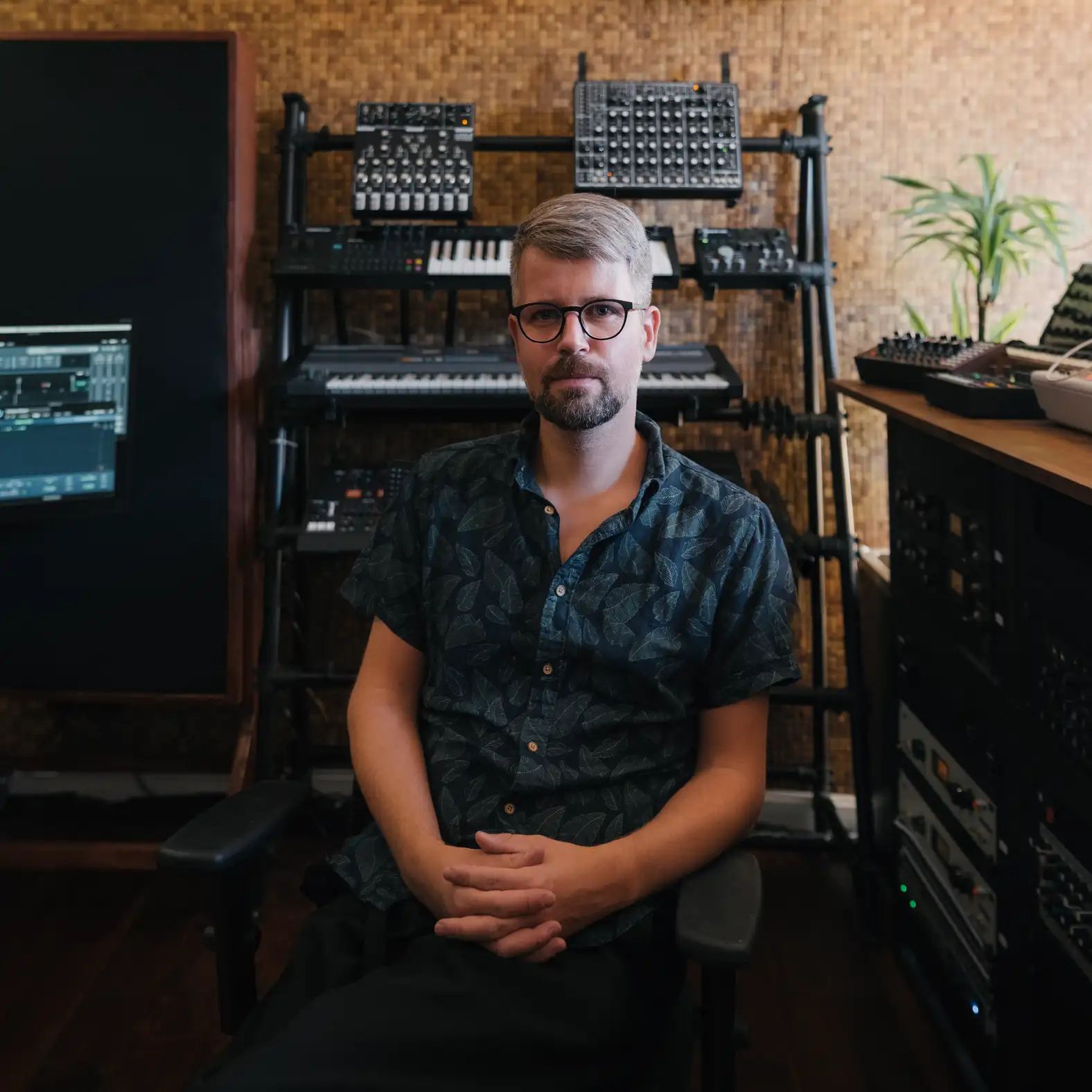
When the topic of Canadian electronic music arises, the name David Kristian is often one of the first to hit the table. Having drawn comparisons with some of the industry's elite players(Richard D. James, Autechre, Tangerine Dream and Tom Jenkinson to name a few), not to mention sharing stage, vinyl, and CD with many of them, AND fostering an impressive roster of soundtrack and sound design credits, David has time and time again established his place as king of the nerds from the great white north.


AAS : With over 15 releases to your credit, not to mention a respectable list of films and sound design works, you've been pretty busy for quite a while now. How'd this all start?

DK : I come from a very small town in New-Brunswick. There isn’t much to do when you live in a small town except for moviegoing and reading. Luckily, when I’d seen enough movies and read enough about them to want to make them, I discovered there was a community TV station in the area that was open to ideas from the public… I was 13 years old when I produced my first video, a stop-motion animation “Star Wars” spin-off, based on characters of my own design. The whole thing ran about 30 minutes and everything in it was custom-made, except the music… This was my first experience doing sound design, based on tidbits I’d gathered from interviews with “Star Wars” sound designer Ben Burtt.

You were known for a long time as a pure analog head. How has it been incorporating elements from the digital domain? How has it affected your sound?

I started making electronic music in the mid-eighties, when everything was on the cusp of turning digital, I never got deeply into FM stuff at the time, discouraged by the horrendous editing. Of course, I later learned how to program FM, and learned to respect digital. I’m not really that much of an analogue-head per-se, I just like the control and flexibility; so naturally, this led to my using mostly analogue synths and sequencers to create my sounds. I just got back into digital because of all the great things happening with physical modeling and other DSP applications. Although I used an Atari STfm to sequence most of the tracks on Synaesthesia (my first solo album), I’m still not really into using a computer for sequencing; I’m more into using computers to generate or “mangle” sounds, which is why I’m such a big fan of Tassman.

Everywhere from the West Coast of the US, to Germany, to right here in Montreal, there seems to have been an explosion of new electronic artists using digital processing to perform a very wide range of styles. Is there anything out there right now that particularly excites you ?

There’s so much stuff out there, it’s hard to list favorites, but some people really stand out. I think what Joshua Kit Clayton, Deadbeat and Vladislav Delay are doing is amazing stuff, along with Richard Devine and Autechre, who keep reinventing themselves. There are also some who don’t really use computers al that much, like “(sic)” and Mira Calix, but still manage to put a new spin on things.

Some people have complained that the whole "geek on stage with a laptop" aesthetic makes for a dry, dull performance in comparison to watching someone scrambling all over a big hardware rig. How do you feel about this ?

It’s not about how much you flail about while playing live, but about how you communicate with the audience. I watched Kit Clayton tear a new ***hole in the atmosphere with a laptop and a graphic tablet at (the first) Mutek, and I’ve seen greebos surrounded by tons of modular equipment look like they were giving a lecture on zooplankton. Of course, it’s always nice to see lots of flashing lights, but you could always use projections; which would be interesting for more than five minutes or use alternate controllers with a laptop.

What do your live and studio set ups look like these days ?

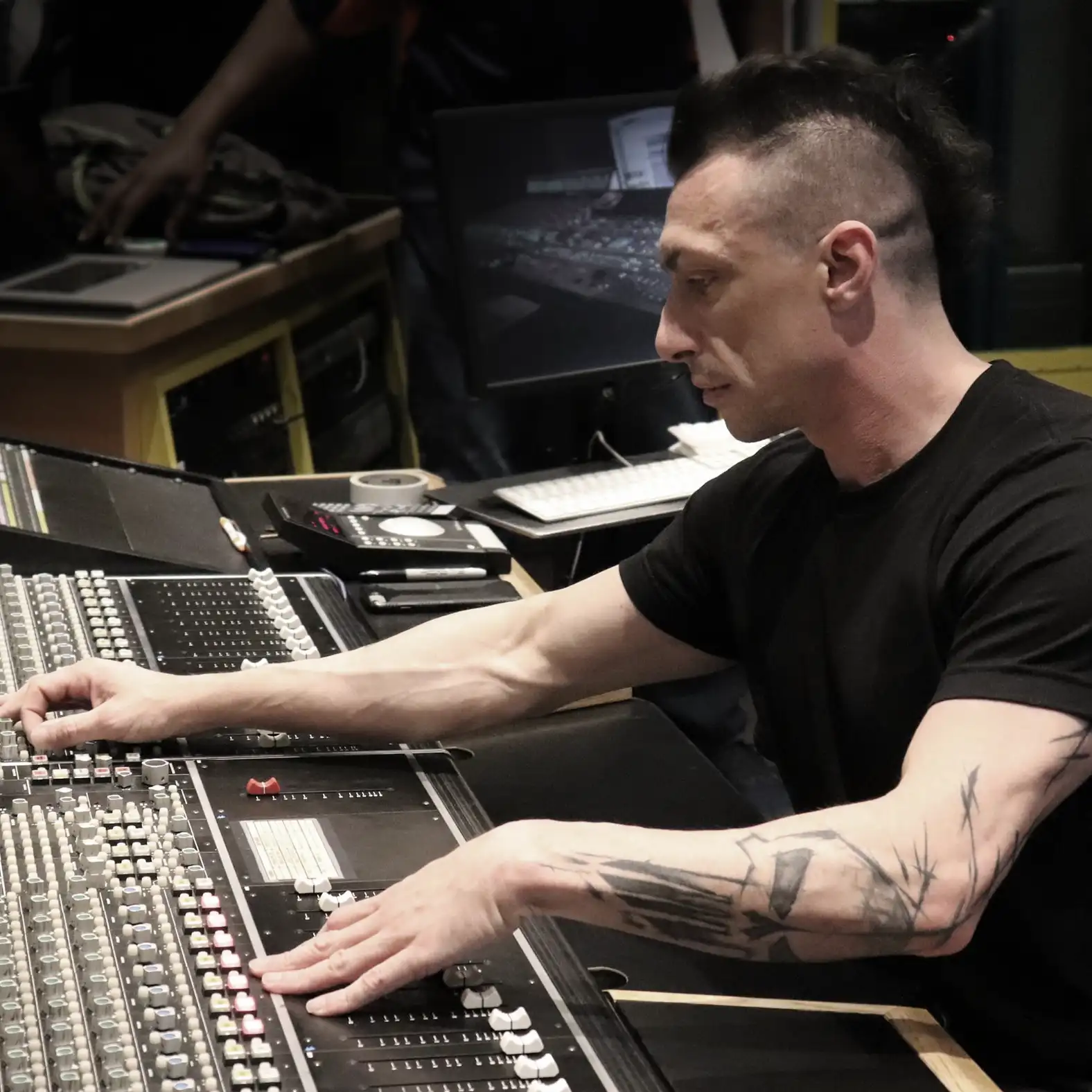
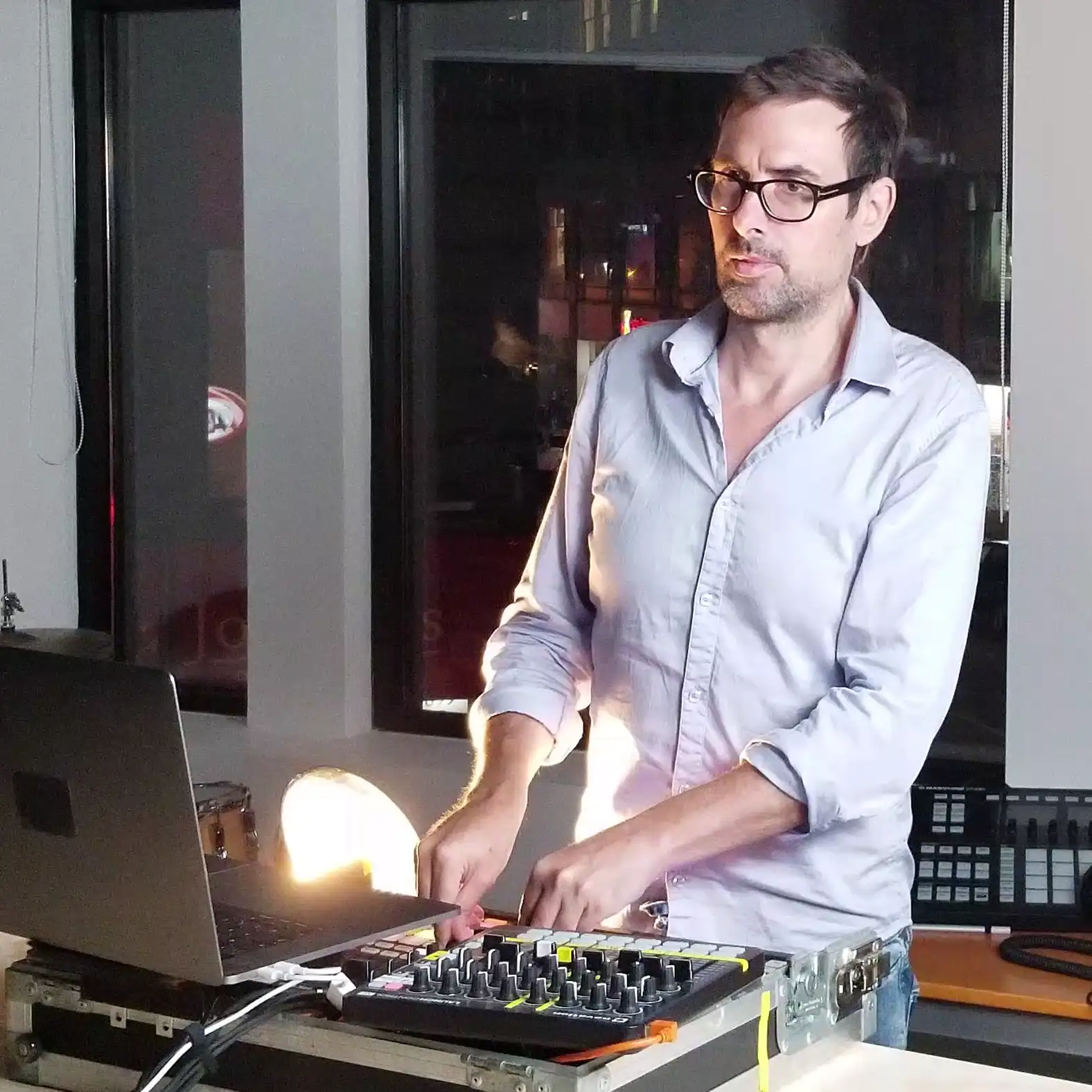
Really simple. Use a Yamaha 01v mixer, the three Electribes (EA-1, ER-1, ES-1), and I’ve also got A small Analogue Solutions box with an (Korg) MS-20-cloned filter in it. To generate the sounds I use with the Electribe ES-1 sampler, I use Tassman controlled by a Doepfer Regelwerk, which also CV-gates my Analogue Solutions box and synchronizes everything to MIDI.

If you could custom design a software tool, what would it look like ? What sort of things have you been building with Tassman ?

Monsters. Multiple-oscillator demons with tons of LFOs and layers of filters. Tassman and the Regelwerk basically supplant the need for a large analogue modular. The great thing is I can reconfigure everything without having to reach for screwdrivers and never run out of patchcords. I’ve heard real analogue modules that don’t sound as warm as Tassman’s, and this includes some real vintage stuff too.

I’ve also been using the Scratcher module to warp some sounds, which makes for great zaps, and the acoustic tube models are also quite useful for giving sounds a sense of space. I’ve got enough reverbs that sound the same, which makes me appreciate this approach all the more. Oh, and as far as the software tool is concerned, I’ll leave that up to you guys, you've already designed some pretty tasty stuff, complete with “Chickenhead knobs” and analogue counters.

Maybe the next generation of Tassman’s step sequencer could also incorporate a “cascade” mode (meaning you could have four rows of sixteen become sixteen rows of four, and a choice of quantized or non-quantized “CV”, and a programmable lag processor. A “Nixie” tube readout would also be nice…

Finally, what's coming next for you ?

I’m working on Karim Hussain & Julien Fonfrede’s “City Without Windows” film project, tons of new tunes, a new release of older collaborations with the Shalabi Effect for Alien8 Recordings and other future releases.

More info on these fine projects at: www.inflictionfilms.com , www.alien8recordings.com, and of course, www.davidkristian.com.